

In simple terms, budgeting is the act of recording your inflows( salary, interest income etc) and your outflows( rent, food etc). This activity will help you manage your ‘cost of living’.
Ideally your inflows should be higher than your outflows and there should be some amount saved at the end of the month.
If this not the case, then you have a cash flow deficit situation. This is not a good thing on a long term basis because that is being either funded by a credit card or a personal loan.
Doing that can make you go backwards in terms of high interest and low credit scores.
Inflow-Outflow= Cashflow Surplus
If you earn $65,000 after tax and your annual expenses are $60,000, you will have a cash flow surplus of $5,000.
Cashflow projection
Also known as cashflow forecasting this is a concept borrowed from the business world. If you are a salaried employee you know how much you will earn every month.
You need to plan for your expenses to be less than your income.
If you have an investment property or shares, you can forecast the rent(pretty accurately) and dividends( more of an assumption) that you will receive on a monthly or quarterly basis. Don’t forget you have to make an estimation for your expenses as well, such as your property managers fees and estimated tax.
If you get a annual bonus, you can make an approximation of this amount too. Always be conservative and anything extra will be a pleasant surprise.
Cost of Living
Once you have done this , do your happy dance !. Congratulations ! You have taken the first step towards building your financial plan.
Understanding the intricacies of the cost of living is fundamental to laying the foundations for budgeting. Some people also refer to it as the “price of living”.
It goes beyond the mere numbers on bills and rent; it’s about comprehending the broader economic landscape that influence your daily life. If you drive to work , fuel costs will take up a chunk of your budget. By delving into the factors that contribute to the cost of living, from housing to transportation, you gain a holistic perspective. This understanding forms the bedrock upon which you can build a realistic and effective budget that aligns with your income and financial goals.
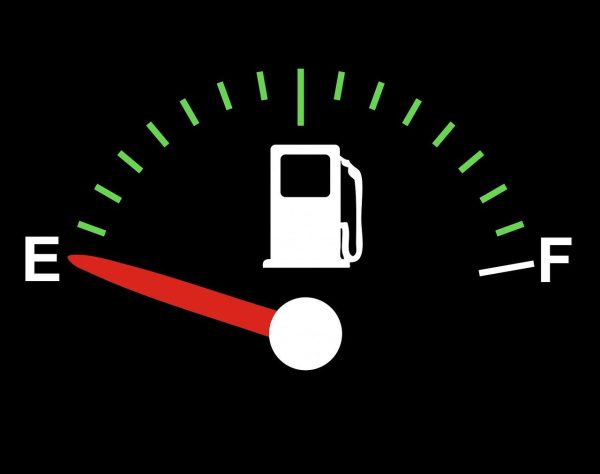
For example if fuel costs form a big part of your expenses check out the fuel apps that to find the lowest price. As Australia imports more than 85% of its oil the price you pay for fuel, is highly correlated with the value of the American Dollar( USD). If the USD appreciates against the AUD and the oil price increases we will have a high petrol price. Also if the oil price falls and the USD stays strong, we could face an increase. Oil prices and the strength of the USD/AUD determines the price of fuel for us in Australia.
Once you’ve grasped the dynamics of the cost of living, the next step is translating that knowledge into a tangible budget. Budget planner apps and spreadsheets become your tools of empowerment.
They streamline the budgeting process but also provide insights into your spending patterns. With real-time data at your fingertips, you can make informed decisions about where to allocate your funds. These tools go beyond mere number-crunching; they serve as dynamic instruments for personal financial planning, helping you navigate the complexities of income and expenses with precision.
Budget Planner
You need to segregate you expenses under broad categories like Fixed and Variable. The reason behind this is so that you are able to understand what your fixed cost of living is.
They are the basic costs that you need to incur to have a roof over your head and food to eat and some other essentials.
Examples of Fixed costs are – rent/mortgage repayments, food, insurance premiums, transportation, utilities and personal care items.
Examples of Variable Costs are- Eating out, Travel, Clothing, Hobbies etc.
Of course the above sub categories are just to give you an idea. Everyone’s priorities and perspectives are different.
You can record all of the above either in a notebook( the good old fashioned way!) or in a budget spreadsheet or by using a good budgeting app. There are many free budget planners and free budget spreadsheets on the web.
A reputable one is on the Moneysmart website- Budget spreadsheet where you can either download their spreadsheet or enter your figures in their online calculator.
If you choose to use the online version, make sure that you change the frequency – weekly, fortnightly monthly etc so that it computes it correctly.
In the digital age, budgeting has evolved beyond traditional methods.
Top budgeting apps, such as Moneysmart Budget and My Millennial Money, have become essential companions on the journey to financial success.
These apps offer not only user-friendly interfaces but also advanced features like expense tracking and personalized insights. .
Financial Literacy
Planning and budgeting are the foundation to being financially literate.
Understanding how much you earn and how much you spend sounds very simple and basic. It actually is, but far too many people think it’s boring and a waste of time. They are doom scrolling looking for the next shiny thing to buy on Afterpay!. I’m not saying you should never do that, but once you know your cashflow surplus you may not want to do so.
At the next stage, you can start building up an Emergency fund. This is where the total of your Fixed Expenses category becomes helpful. You should aim to build up at least 3-6 months of your fixed expenses. This can be accessed in case you are made redundant or decide to look for another job.
Simple Interest
As you embark on your journey toward financial mastery, understanding the power of interest is paramount.
Simple interest, a fundamental concept, plays a pivotal role in shaping financial decisions. Your emergency fund savings should be placed in a bank account that is separate to your main transaction account. All bank accounts pay simple interest. However when we take out a home loan , we pay compound interest.
It is crucial to understand the difference and also how the simple interest formula works.
Choose a high interest saver account either via Canstar or Finder. Take the time to read the fine print. Many of them offer a higher introductory rate.
The very purpose of an emergency fund is that it should be easily accessible.
The simple interest formula is P * R * T, where P=Principal, R= Interest rate and T=Time period.
So if Macquarie bank is offering 4.75% p.a and you have $5,000. You will earn $5,000 X 4.75%= $237.50 in interest. Ideally the following year you should add the $237.50 to your principal amount and you will earn $248.78 in year 2 given that the interest rate remains the same.
Good Luck on your budgeting journey. The most important part is to make a start.
If you need help do contact me and I will be more than happy to guide you.
Disclaimer
Please note the above information is purely for educational purposes. Please consult a registered financial adviser and get personal financial advice based on your goals and objectives.